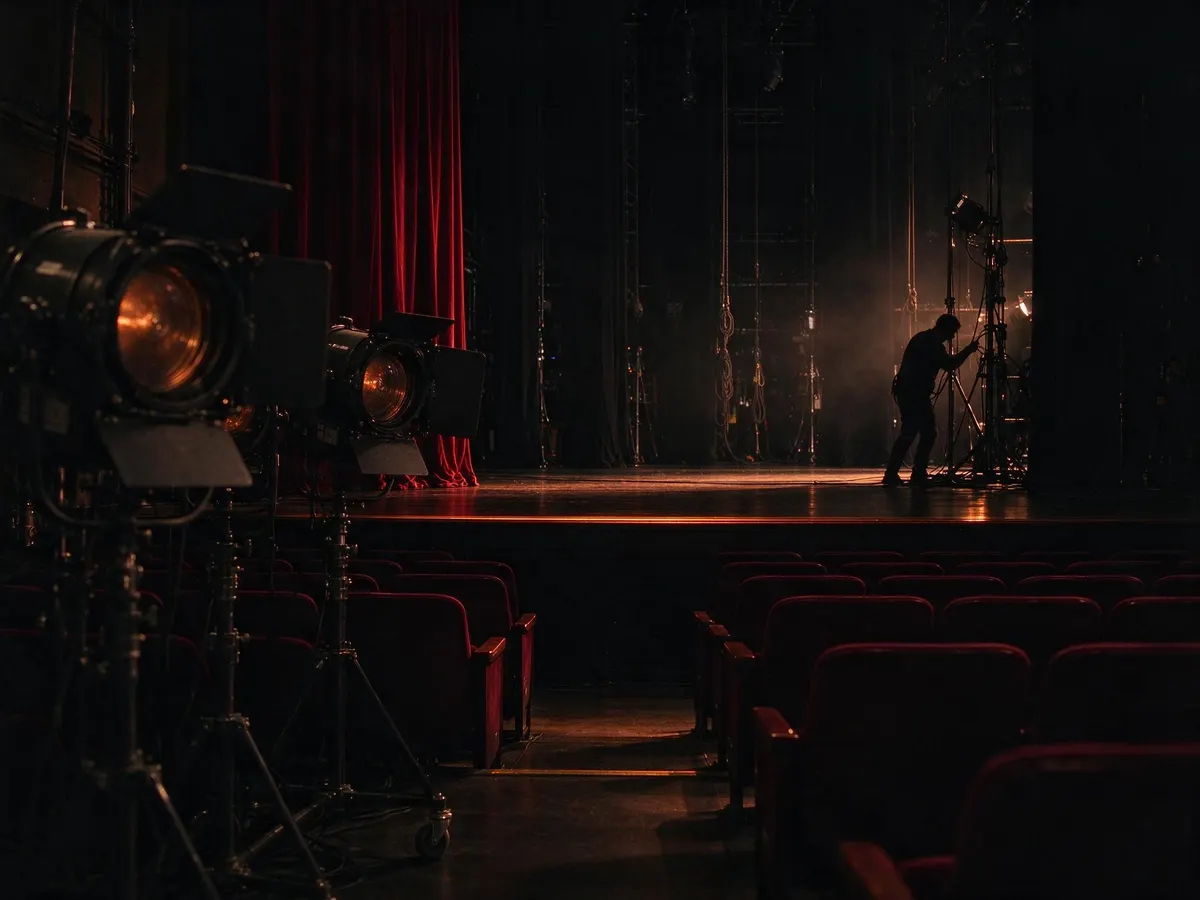
How theatre lighting design shapes the way an audience feels
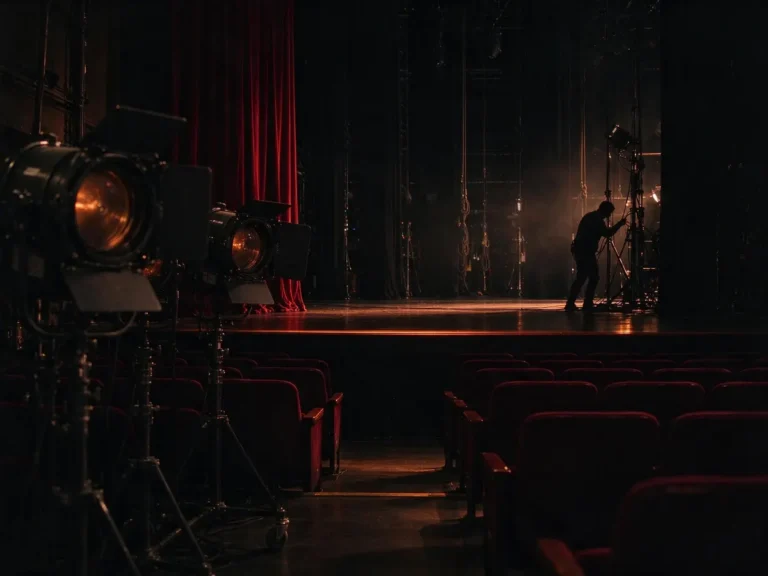
Walk into any black box theatre before the house lights drop and you’ll notice the same thing every time: a stage that looks flat, almost dull, under work lights. Then the first cue lands and that same space can suddenly feel like a forest, a courtroom, a memory. Lighting design does this work quietly, and most audiences never stop to think about how it happens.
The grammar of light
Lighting designers often talk about their craft the way musicians talk about scales. There are only a handful of basic tools, and most of the rest is just combining them: intensity, colour, angle, movement, and timing. Designers rarely need to invent something new for a fresh show — instead they rearrange the same variables to fit a particular story, which is partly why two productions of the same play can feel completely different depending on who’s running the board.
Angle tends to carry a lot of the emotional weight. Light from above and slightly behind an actor can read as heroic or exposed, depending on the colour temperature used. Light from below — the classic “horror flashlight” position — unsettles audiences because it flips the shadow pattern we’re used to seeing under daylight. Side light, sometimes called cross light when it comes from the wings, gets credit for giving dancers and movement-heavy shows a more three-dimensional look; without it, bodies can flatten out against the backdrop.
Colour is a decision, not decoration
Amber and warm white tend to get linked with safety, domesticity, or nostalgia. Cool blues and steel tones usually point toward distance, cold, or danger. Many designers see this less as superstition and more as a habit built up from years of association. A designer picking the wash for a tense second act isn’t usually reaching for a colour because it “looks nice” on the swatch — they’re choosing one that helps set an audience’s mood before a single line gets spoken.
Community and amateur groups often end up working with whatever gel stock the venue already has lying around, and that limitation forces a kind of creative discipline. Working inside a narrow palette can actually sharpen a design, since every colour choice has to justify itself instead of being one option among fifty.
Cueing and the rhythm of a show
A well-built cue sheet gets compared to a musical score more often than a simple checklist, and for good reason. Fast fades snap an audience’s attention; slow fades let a scene dissolve gradually enough that viewers might not consciously register the shift until it’s already happened. Directors who lean into this will sometimes ask a lighting designer to bury a scene change inside a slow cross-fade, using the audience’s focus on dialogue to cover movement happening in near-darkness at the edges of the stage.
Timing also has to hold up during live performance, so cues generally need some give built in. An actor running a line ten seconds long shouldn’t throw off the whole lighting sequence. Many designers build their “go” points around specific dialogue or blocking rather than a stopwatch, so the design can breathe alongside the actors instead of chasing them.
What community theatres can learn from touring productions
Touring shows rig fast and strike fast, and that pressure encourages an economy of design that smaller companies can borrow from even without the budget to match it. A touring lighting designer usually arrives with a plot built from relatively few instruments doing as much work as possible, since every extra fixture adds load-in time. Community venues working with a handful of fixtures and a basic dimmer board can lean on the same logic: instead of trying to light every inch of the stage evenly, pick two or three key positions and let contrast carry the storytelling.
Break time backstage during a long tech rehearsal has its own informal rhythm — crews swapping stories, someone scrolling on a phone in the wings while cues get reset. Some stage managers and touring crew who spend long nights waiting between cues have mentioned passing the downtime with a hand of cards or a quick spin on an online casino india app, treated strictly as a small, time-limited diversion rather than anything more, since backstage life often runs on long stretches of waiting punctuated by short bursts of intense work. Anyone doing the same should keep it occasional, stick to a set budget, and remember it’s entertainment, not income, and strictly for adults.
Practical notes for a small venue
- Start with a few specials for your lead actors before worrying about full-stage washes; audiences tend to track faces, not floors.
- Use gel or LED colour sparingly in the first act so you have room to shift the palette when the story darkens later on.
- Write cue points against blocking and dialogue, not clock time, so the design has a better chance of surviving a slower or faster night.
- If your rig is small, favour contrast over coverage. A dark stage with one strong pool of light can read stronger than an evenly lit one.
None of this requires an expensive rig. Some of the most memorable lighting choices in small theatres come from a handful of fixtures used with real intent, rather than a large inventory used without much thought behind it. The audience rarely notices the equipment. They notice the feeling, and that feeling is usually built one deliberate choice at a time.
About the Author